← Back to Projects
Projects · Vikoma Workboat

Vikoma

From scrap heap to working electric workboat.

A practical demonstration of what is possible when engineering starts with the vessel and its purpose.

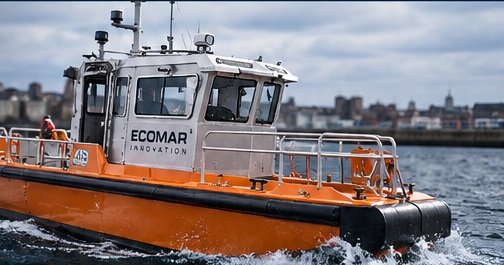
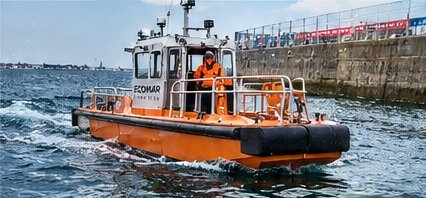
Vikoma electric workboat on the water
The starting point

The world is full of abandoned boats.

Some are beyond use. Others are just tatty but can be saved.

At Ecomar Innovation, we wanted to find out what it really means to recover a derelict boat from the scrap heap.

We found an old Vikoma workboat being scrapped by Aberdeen Harbour. It had been used as a boom layer to collect spilled oil. The vessel was in a sorry state, but the hull was sound and it was cheap. So we bought it.

The transformation

From derelict hull to working vessel.

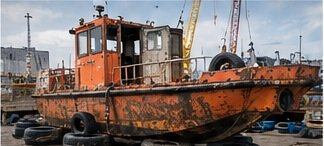
Neglected Vikoma workboat before restoration
BEFOREA neglected workboat with a moon pool, broken outboard and rotten wheelhouse.
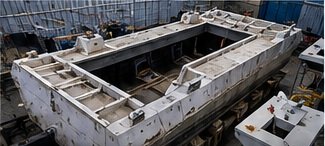
Vikoma workboat during rebuild
DURINGStripped back and rebuilt. The moon pool was filled, the hull restored and a new wheelhouse fabricated.
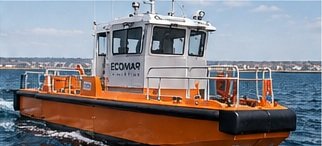
Completed Vikoma electric workboat
AFTERA fully electric workboat ready for commercial use.
Engineering around the operation

The system was designed around the boat.

The vessel's working role dictated the energy system, propulsion arrangement and practical installation.

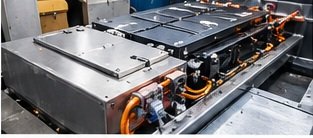
Vikoma battery system
Energy system

45 kWh of deck-mounted energy.

We developed a 45 kWh flat-form battery pack that could sit on the deck without significantly compromising how the workboat was used. The bow space housed cooling fans, low-voltage batteries and electrical connections.

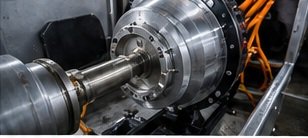
Axial-flux electric propulsion system
Electric propulsion

Compact propulsion, built for bollard pull.

A new shaft and cutlass bearings were connected to an axial-flux electric motor. The compact motor sat within the centre well of the cathedral hull, with a deep shaft angle to provide the required working pull.

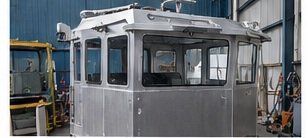
New Vikoma wheelhouse under construction
Built to last

Restore the hull. Rebuild what matters.

The moon pool was filled and the hull remodelled back to its original cathedral form. A new wheelhouse, rubbing strakes and removable components were fabricated to suit working use and future serviceability.

Vikoma electric workboat during real-world testing
Real-world testing

It had to work in the real world.

We launched the boat in late summer and it worked first time. It operated at a steady 6 knots — the hull-speed limit — and was subsequently used by a major port on the south coast as a litter picker.

During a prolonged period of rain, the vessel filled with water and the electrical system was submerged for approximately three weeks. The low-voltage cables and batteries were replaced and the damage investigated.

The system was brought back into operation. The axial-flux motor was replaced as a precaution, with the original unit retained for bench testing.

The boat returned to service and completed a further three years of operation.

What we learned

Four lessons from a very real test.

The project was valuable because it exposed the engineering to the same conditions that affect any working vessel.

01

Old vessels can have another life.

A suitable hull does not necessarily need to be scrapped if it still has a purpose.

02

Electric propulsion is robust.

A properly designed electric drive can withstand real commercial use.

03

Design for the operation.

The energy system and propulsion must be designed around how the vessel is actually used.

04

Committed partners make the difference.

Technology only delivers its potential when operators and partners are equally committed.

The result

Sometimes the quickest way to prove an idea is to build it.

6 knotsSteady, efficient operation at hull speed
45 kWhDeck-mounted battery pack
3+ yearsContinued commercial service after the test programme