
SIG. Integration without the unnecessary complexity.
Package power, cooling, control and protection into defined interfaces so the complete installation is easier to build, commission and maintain.
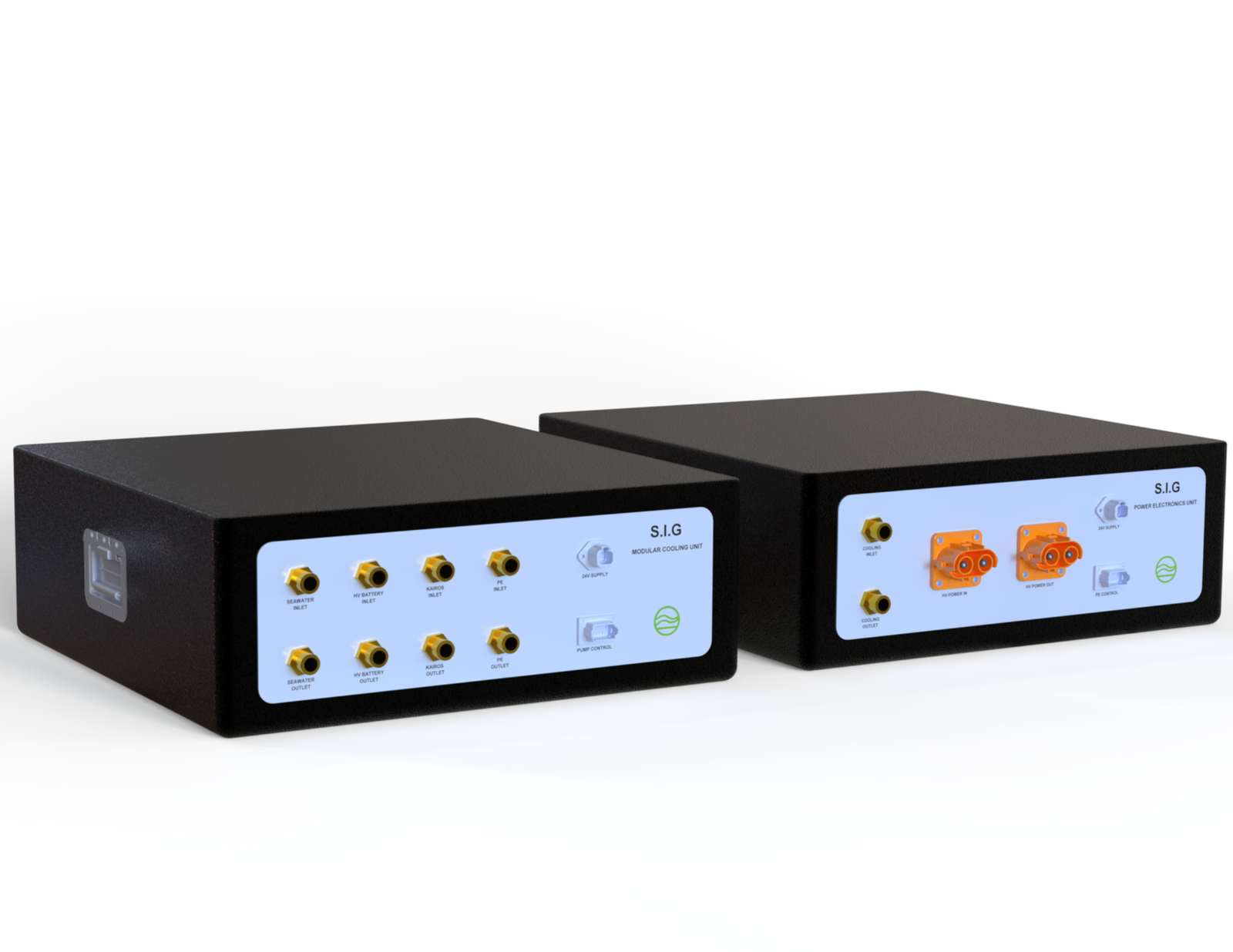
Engineered for the real installation.
Defined HV and LV interfaces
Designed as part of a complete system rather than treated as a stand-alone component.
Integrated power distribution and protection
Designed as part of a complete system rather than treated as a stand-alone component.
Cooling and thermal-management interfaces
Designed as part of a complete system rather than treated as a stand-alone component.
VCU, TCU, HMI and communications
Designed as part of a complete system rather than treated as a stand-alone component.
Repeatable modular installation
Designed as part of a complete system rather than treated as a stand-alone component.
Designed around vessel-level commissioning
Designed as part of a complete system rather than treated as a stand-alone component.
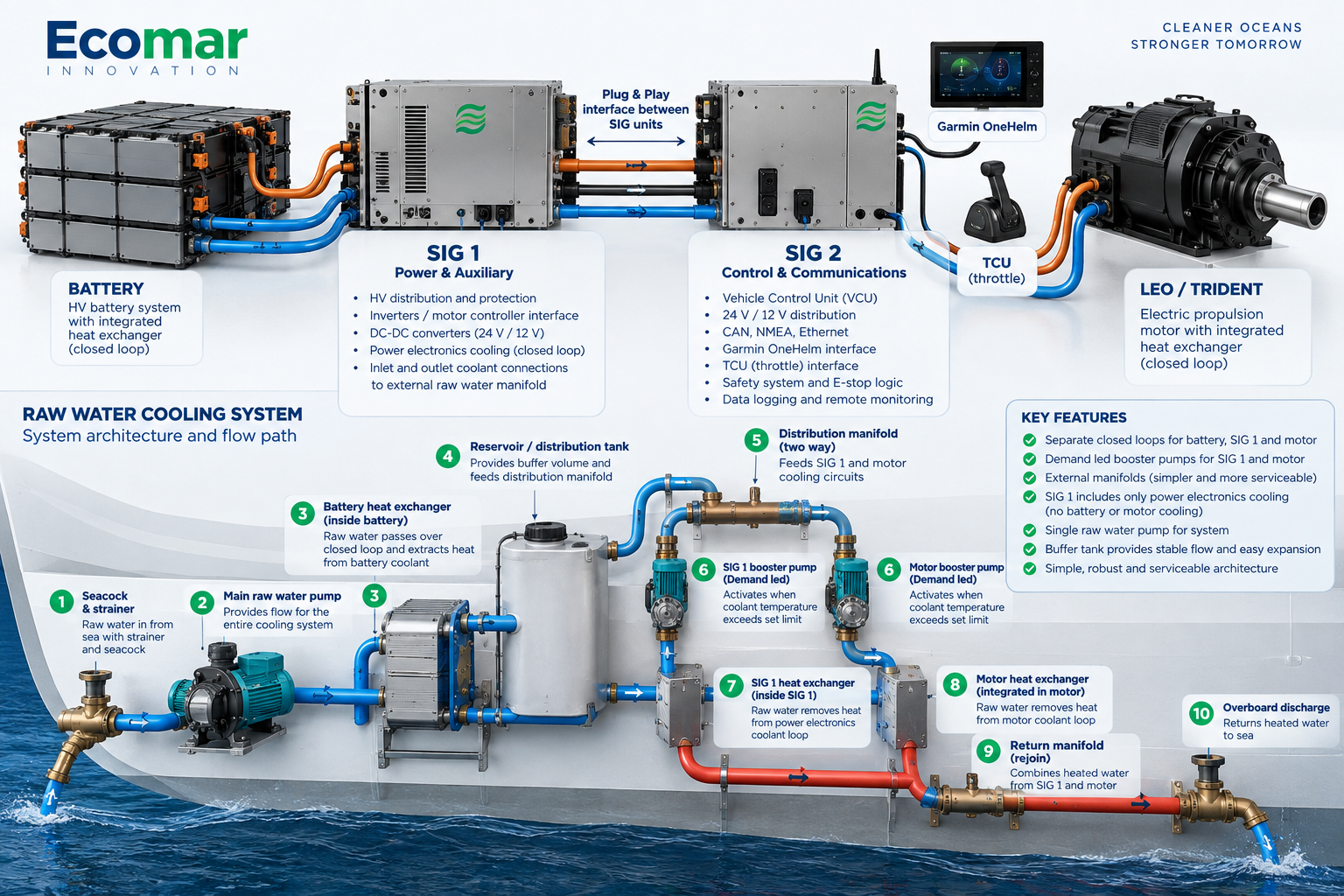
Modular by design.
SIG packages the interfaces between battery systems, inverters, auxiliary supplies, cooling, controls and vessel systems.
The objective is to move complexity into a controlled architecture where it can be tested and repeated.
Keep the interfaces together.
High-voltage distribution, protection, power electronics and thermal management need to be considered together.
Defined connection points simplify installation and reduce the risk of treating cooling, wiring and control as separate afterthoughts.
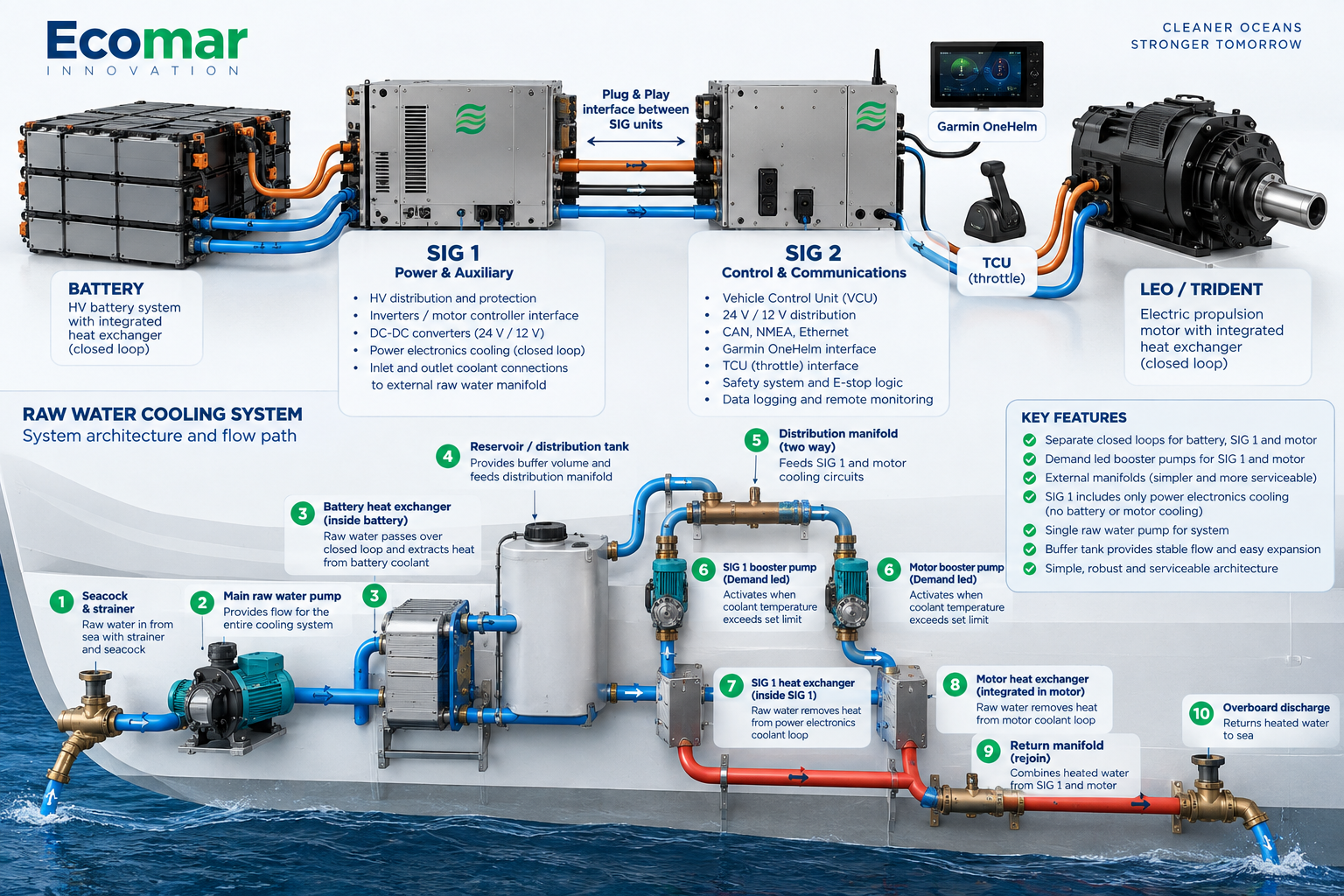
Make everything behave as one system.
The final stage connects propulsion and energy to the operator, vessel systems, communications and safety logic.
That is where system engineering becomes operational value.
Let's see where it fits.
Tell us about the vessel or application and we can establish the right engineering route, including the technology, interfaces and installation requirements.
Start a project →Requirement → Architecture → Integration → Working system
The equipment matters. The engineering around it matters more.